-
Tilt lens for Nikon Z
A Tilt lens changes the focal plane, and this is impossible to do with transforms in Software1. Hardware is required.
Getting a Tilt lens for Nikon Z leaves you with only a few choices.Use Nikon F mount Tilt-Shift lenses with the FTZ adapter:
- Nikon PC NIKKOR 19mm f/4E ED Tilt-Shift Lens $3,396
- Nikon PC-E NIKKOR 24mm f/3.5D ED Tilt-Shift Lens $2,196
- Nikon PC-E Micro-NIKKOR 45mm f/2.8D ED Tilt-Shift Lens $2,046
- Nikon PC-E Micro-NIKKOR 85mm f/2.8D Tilt-Shift Lens $1,976
- Samyang 24mm f/3.5 ED AS UMC Tilt-Shift Lens $669
Nikon has not released any Tilt-Shift lenses for Z yet, so you are currently left with only:
- TTArtisan Tilt 50mm f/1.4 Lens $199
- TTArtisan 100mm f/2.8 Tilt-Shift Macro Lens $389
The 50mm is not the best quality with its standard double-Gauss design, and who needs a 100mm Tilt lens?
The idea is to use an F-to-Z Tilt adapter and your favorite F-mount lens (the image circle of a Tilt-Shift lens is larger, but here it is used with a DX sensor, so this is an advantage; I cannot check for FX).
The popular NYC store does not have such an adapter, but the Kipon company store has one: Tilt Adapter for Nikon F Mount Lens on Nikon Z Mirrorless Camera.
The site lists the item as shipping within 1 business day, but as I learned from customer service, it is first shipped from somewhere in China to another warehouse, and then from there to the customer. This translates to a 2-3 week shipping time.The alternative is to use a Sony E-to-Z mount Tilt adapter, or a Fujifilm X-to-Z mount Tilt adapter with an additional lens adapter as the 16mm flange distance of the Z mount is a bit shorter than the Sony (18mm) or Fujifilm (17.7mm) one2.
The Kipon F to Z mount Tilt adapter arrived:It feels solid and high quality. Tilting is smooth and has enough friction to hold a lens even without using the lock.
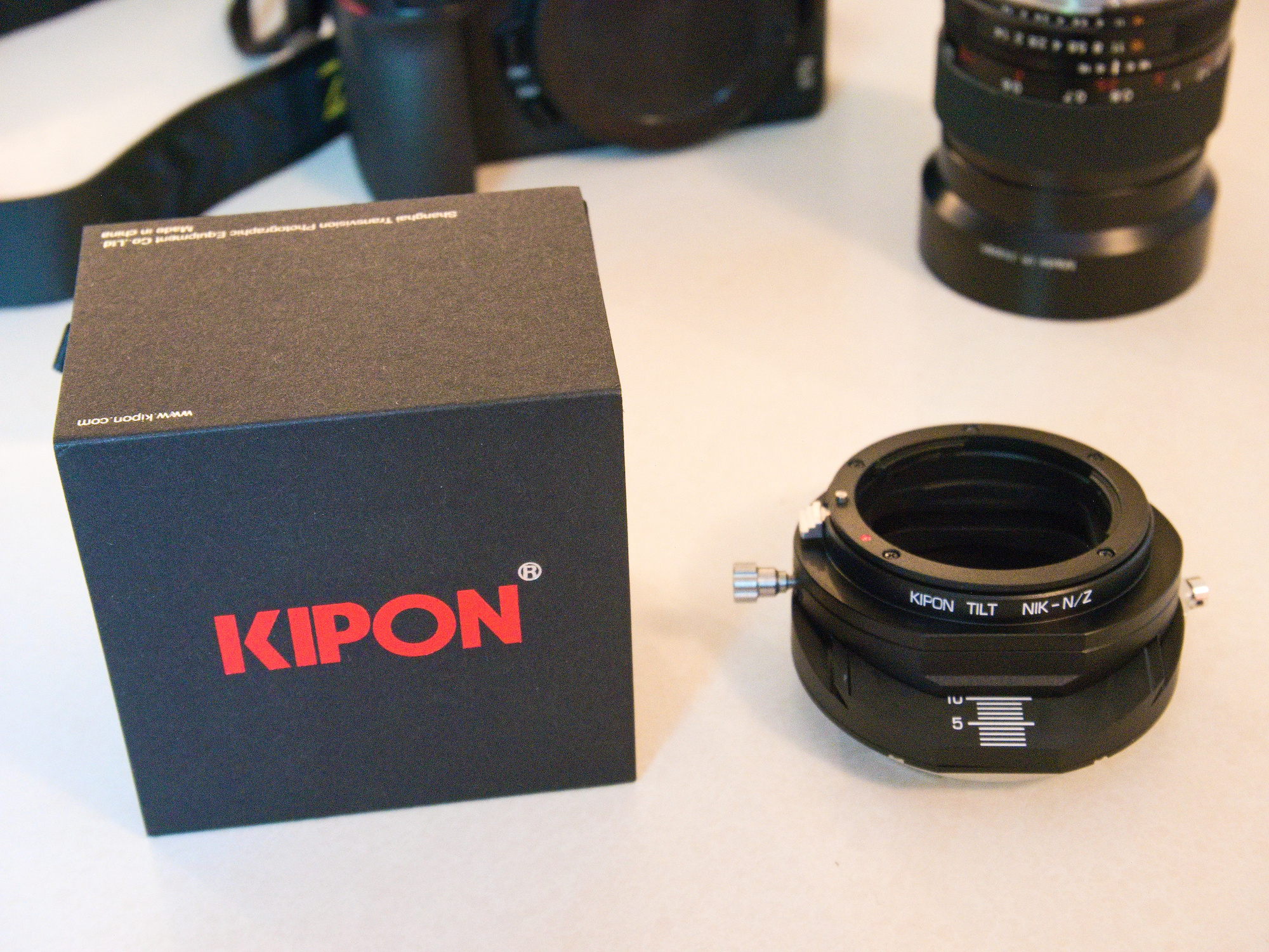
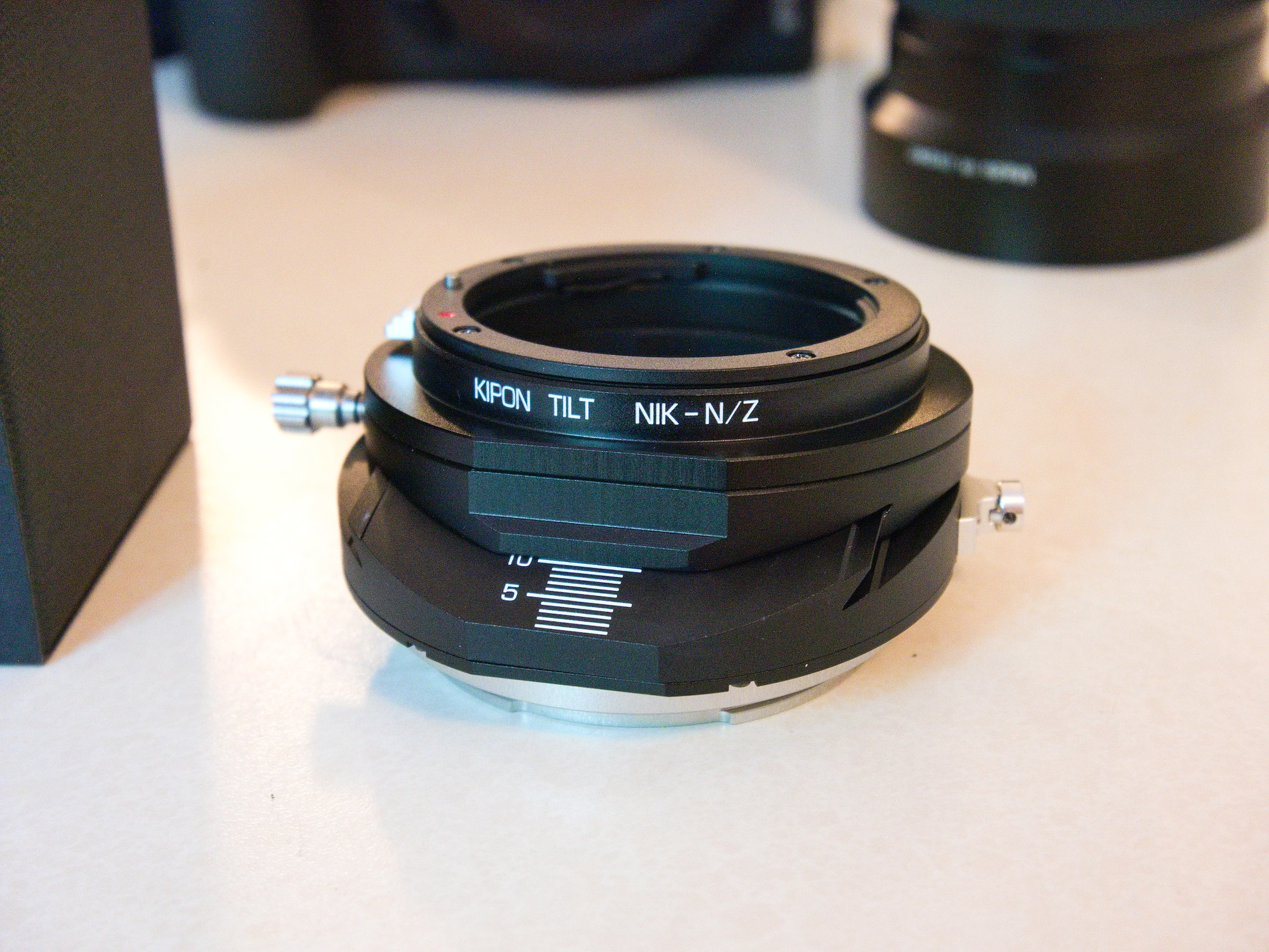
The adapter has a max Tilt of 12° and can be rotated 360° with 30° click stops. The smaller plunger on the right side unlocks the click stops during rotation.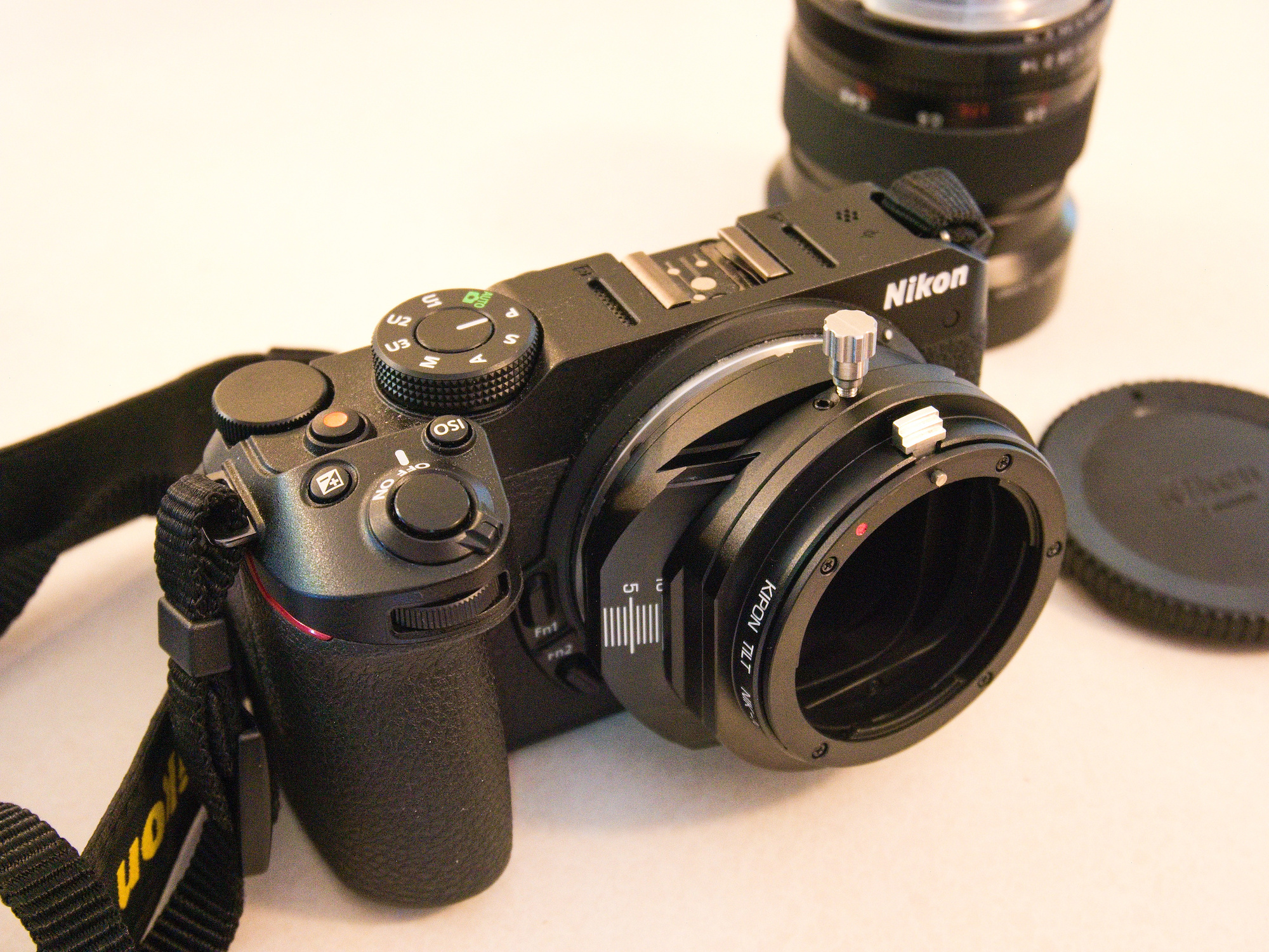
For the test, a Voigtländer 58mm f/1.4 SL lens was used: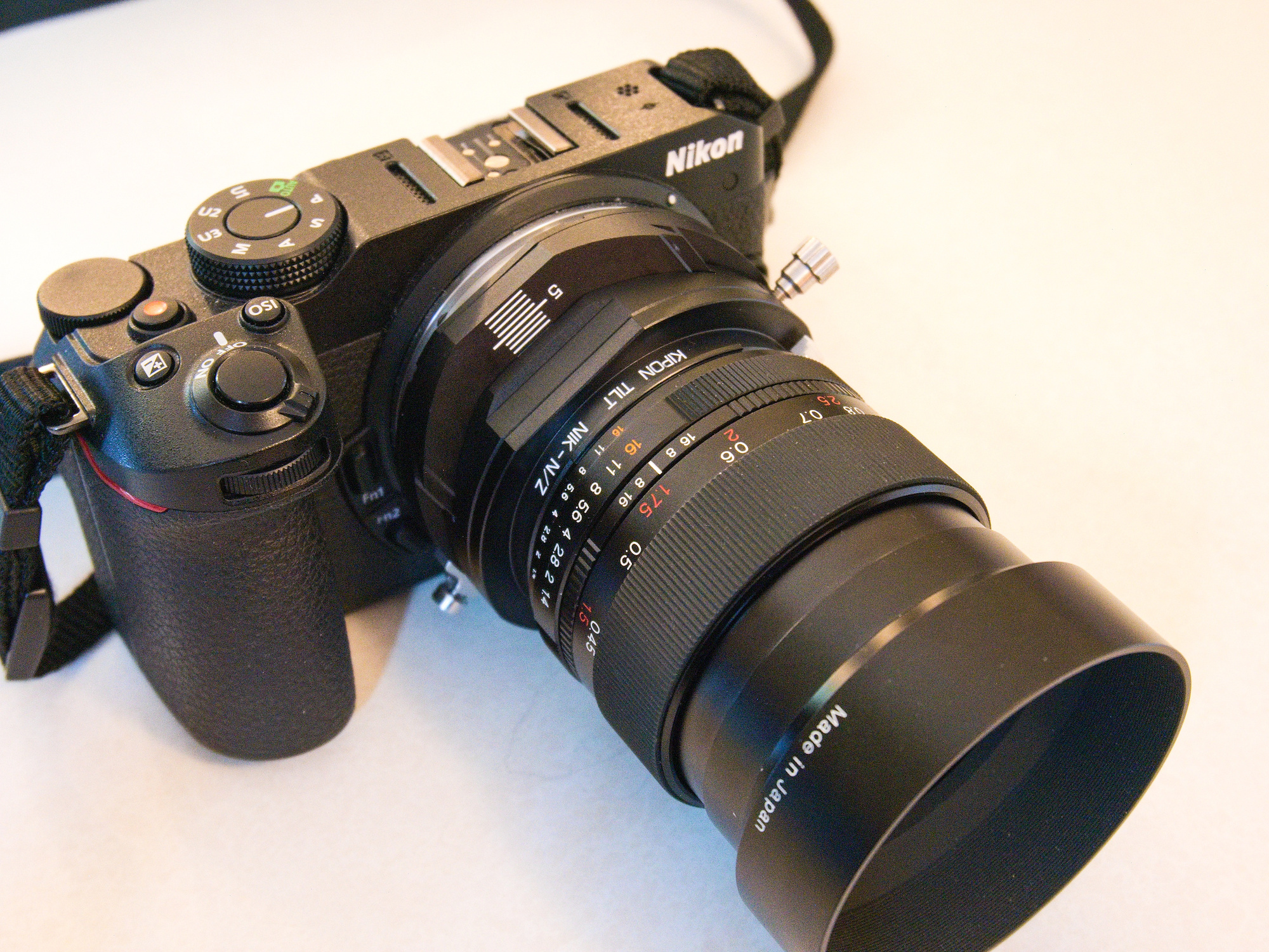
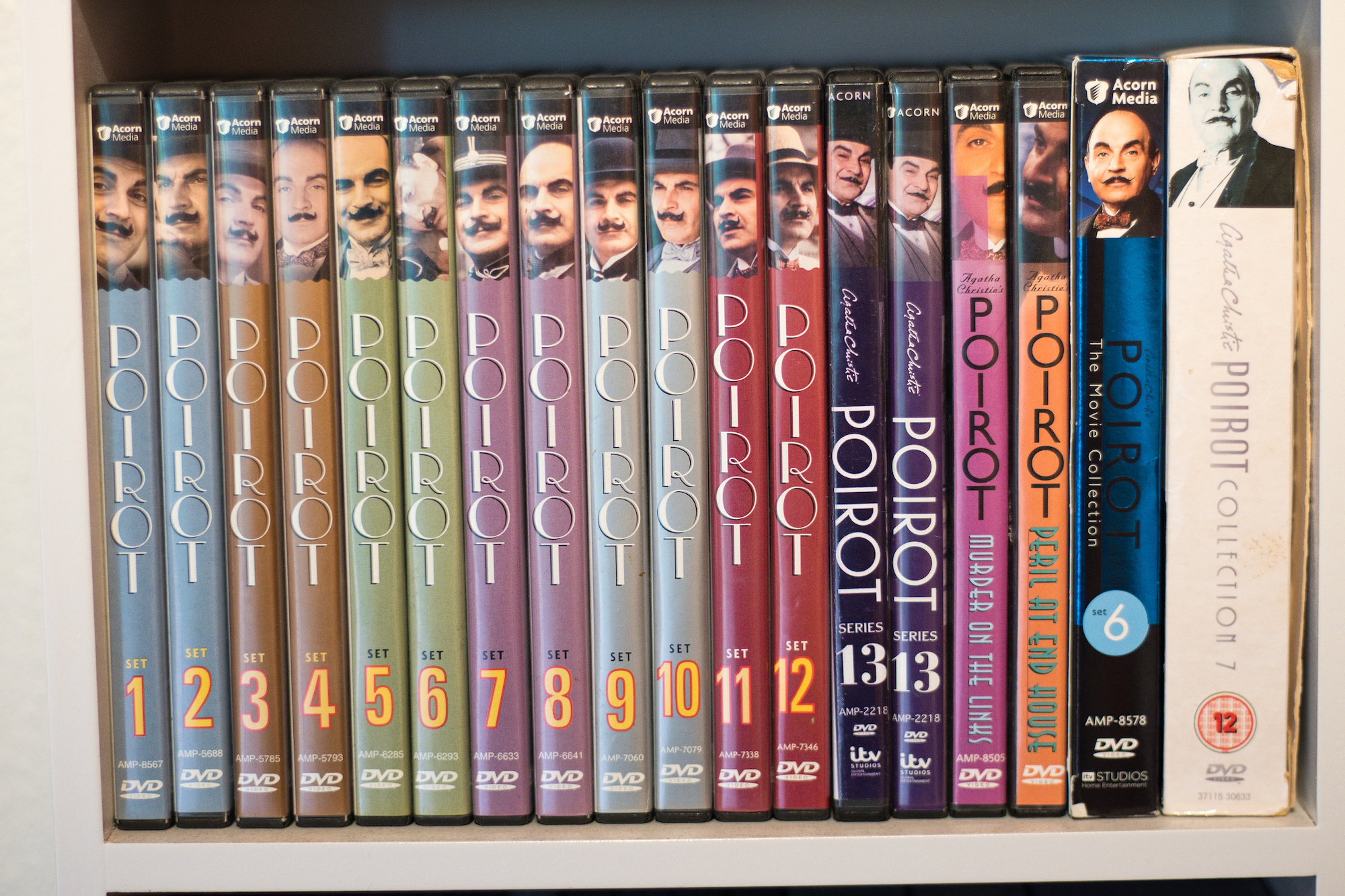
It really works.Shelf without Tilt:
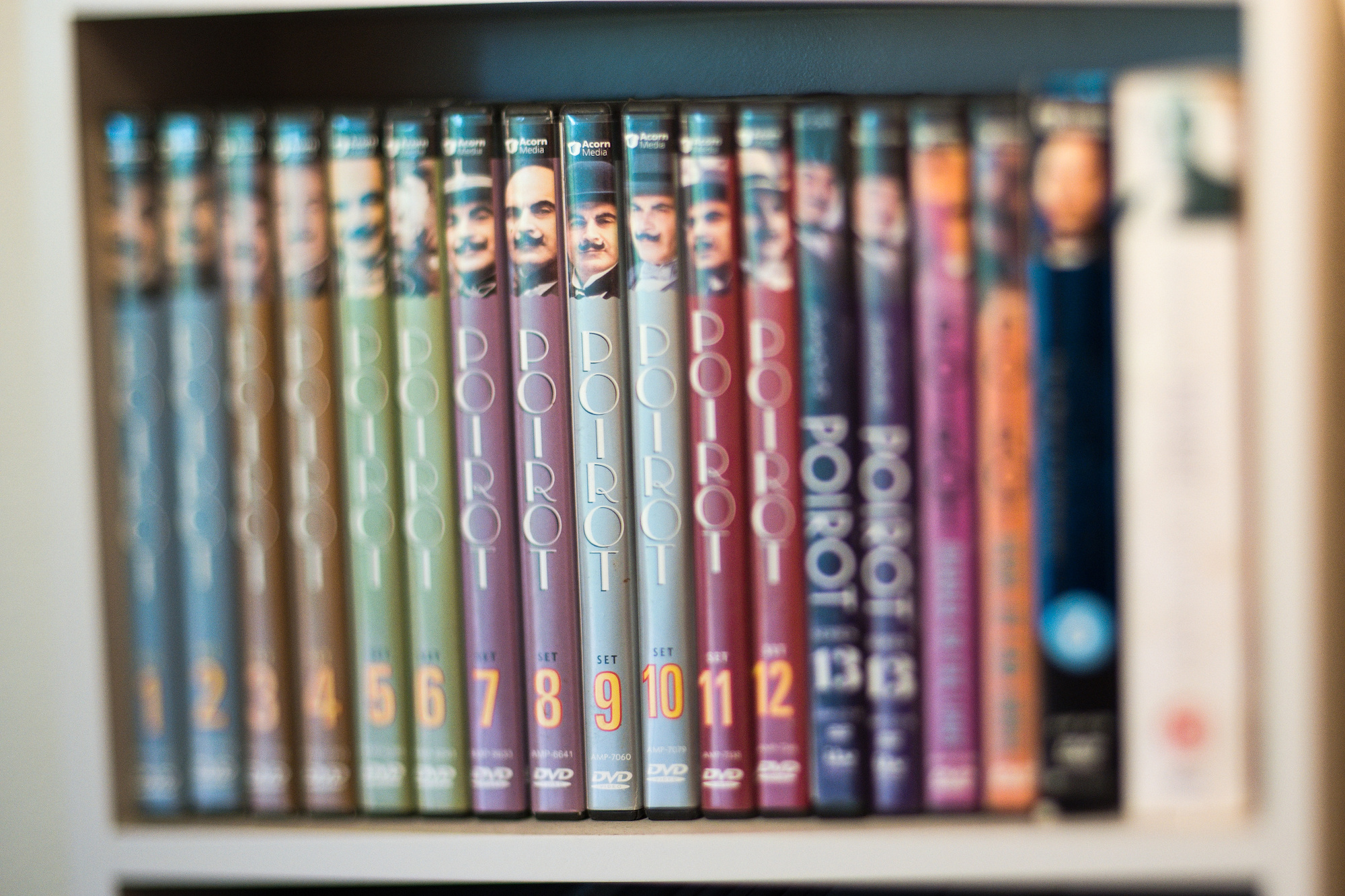
Shelf with max Tilt:
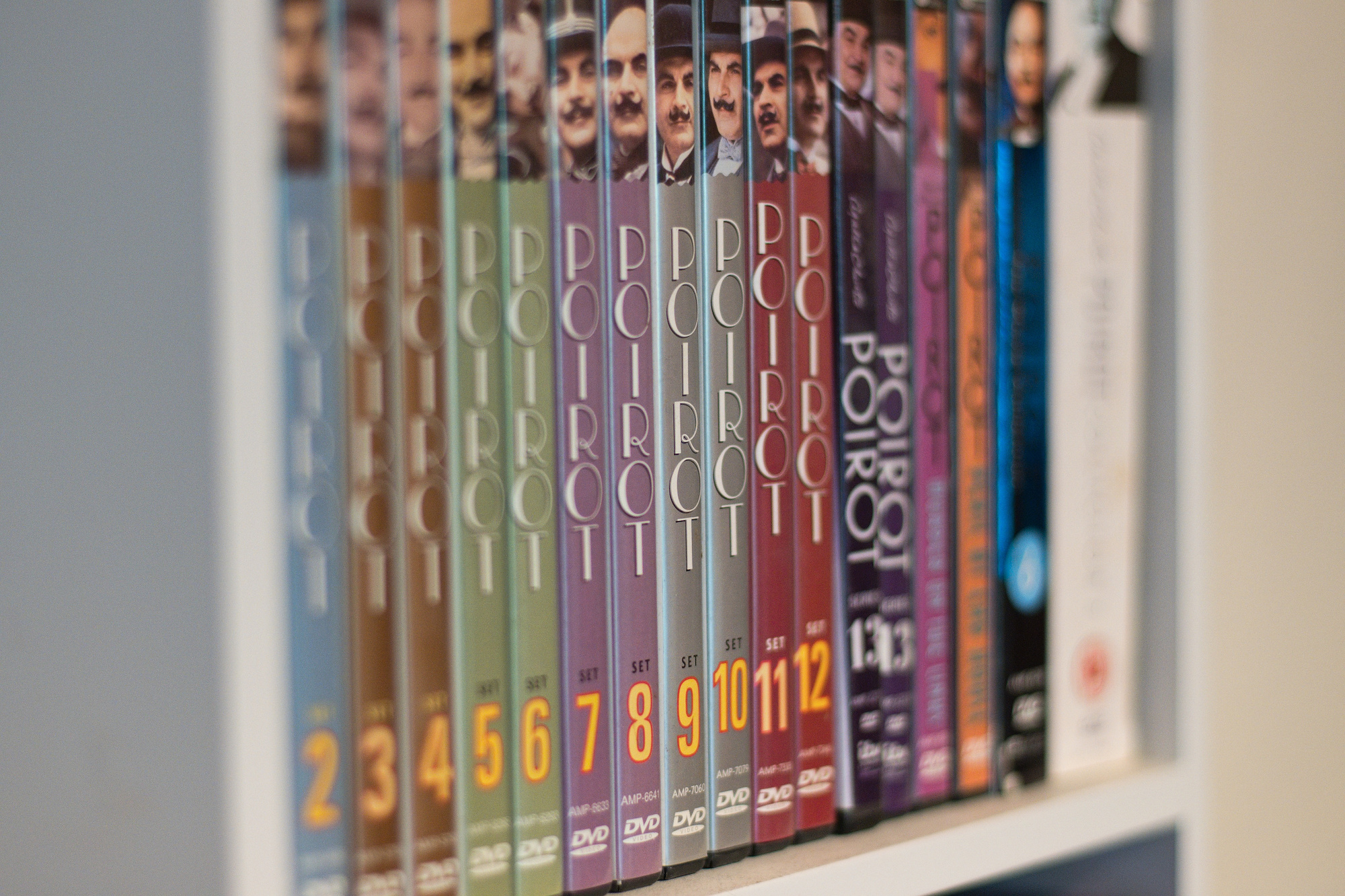
Shelf from an angle without Tilt:
Shelf from an angle with max Tilt:
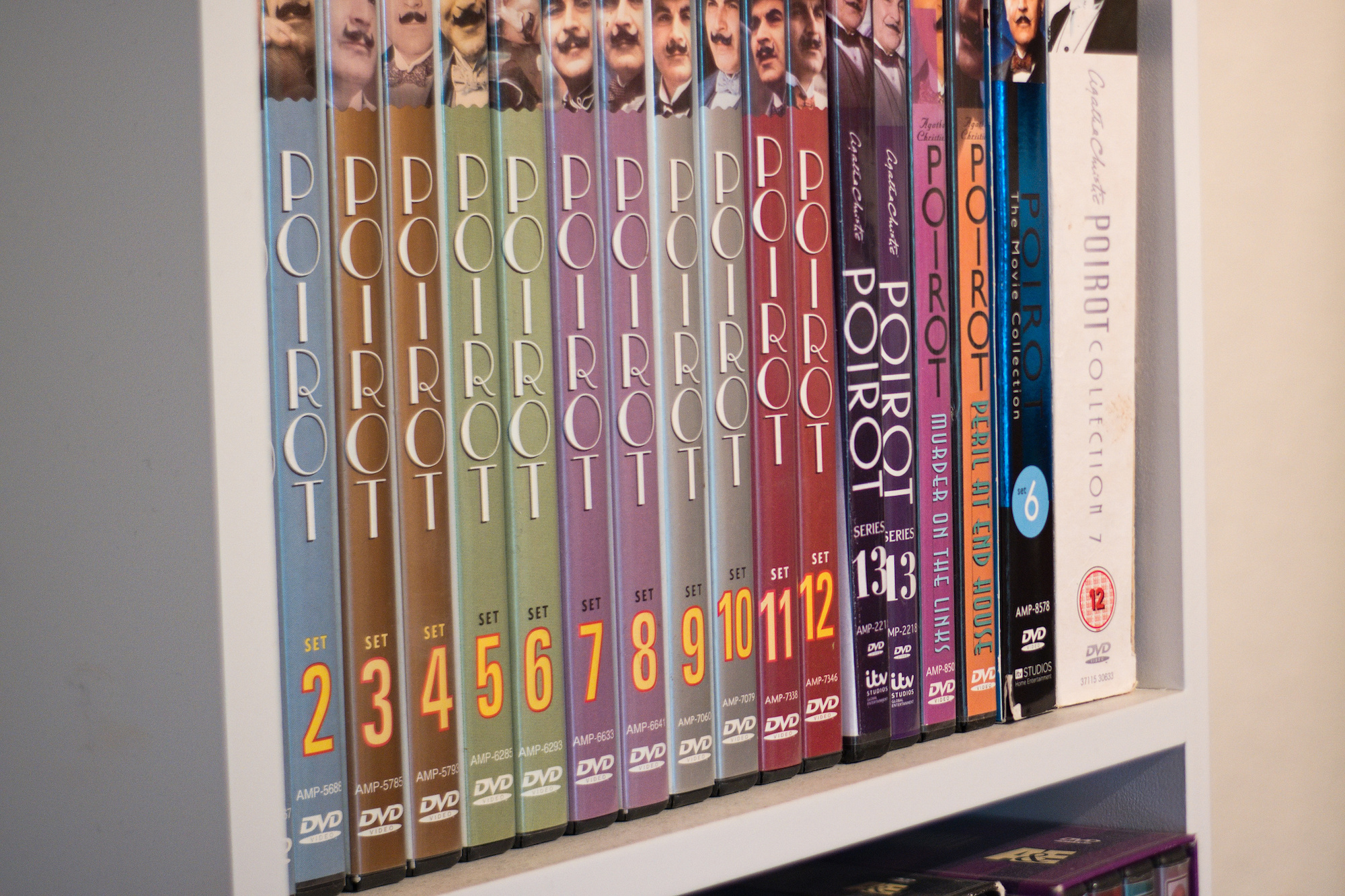
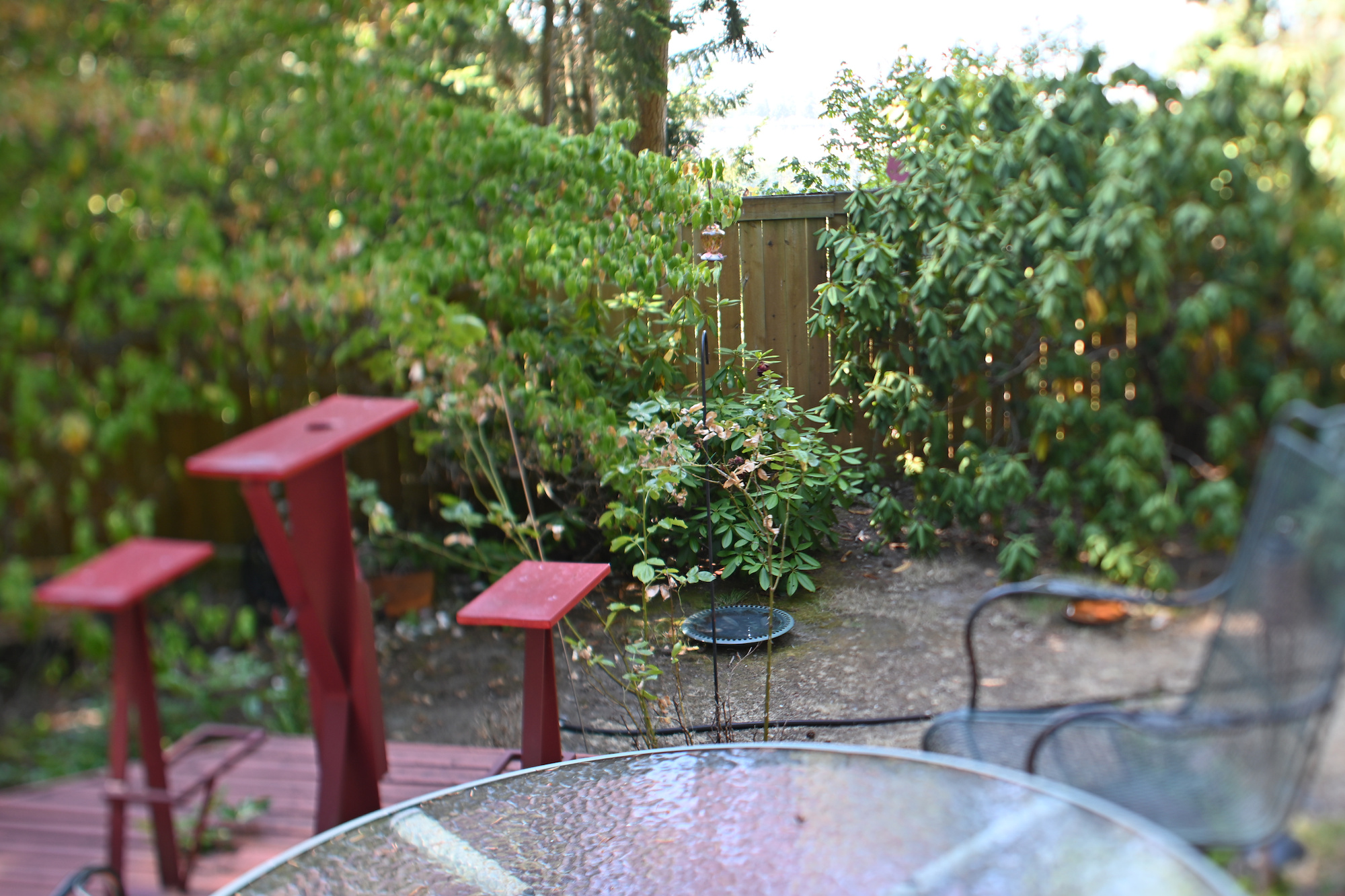
Examples with max Tilt:

The Shift feature of Tilt-Shift lenses is of little interest, as the projection is only a geometric transform in post-processing. The panorama tools easily take care of this with vertical control points (t2). You can never align the lens that perfectly.
-
There are software packages available to fake this effect, but it is never the real thing. ↩
-
Tilt adapter:
-
KIPON Tilt / Shift Lens Adapter for Nikon F-Mount Lens to FUJIFILM FX Camera $203
-
KIPON Tilt Lens Mount Adapter for Nikon F-Mount Lens to Sony E-Mount Camera $81
Additional lens adapter:
-
FotodioX Lens Adapter for FUJIFILM X-Mount Mirrorless Manual Focus Lens to Nikon Z-Mount Mirrorless Camera $29
-
Venus Optics Megadap ETZ21 Pro Sony E-Mount Lens to Nikon Z-Mount Autofocus Adapter $249
-
Techart PRO Autofocus Adapter for Sony E-Mount Lens to Nikon Z-Mount Camera (V2) $249
-
FotodioX Pro Fusion Sony E-Mount Lens to Nikon Z-Mount Smart AF Adapter $249
-
FotodioX Lens Adapter for Sony E-Mount Mirrorless Manual Focus Lens to Nikon Z-Mount Mirrorless Camera $29
-
-
Lāhainā Banyan Court, Maui, Hawaii
On August 8-9, 2023, a wild fire destroyed parts of West Maui, including the Lāhainā Banyan Court which I had visited shortly before.

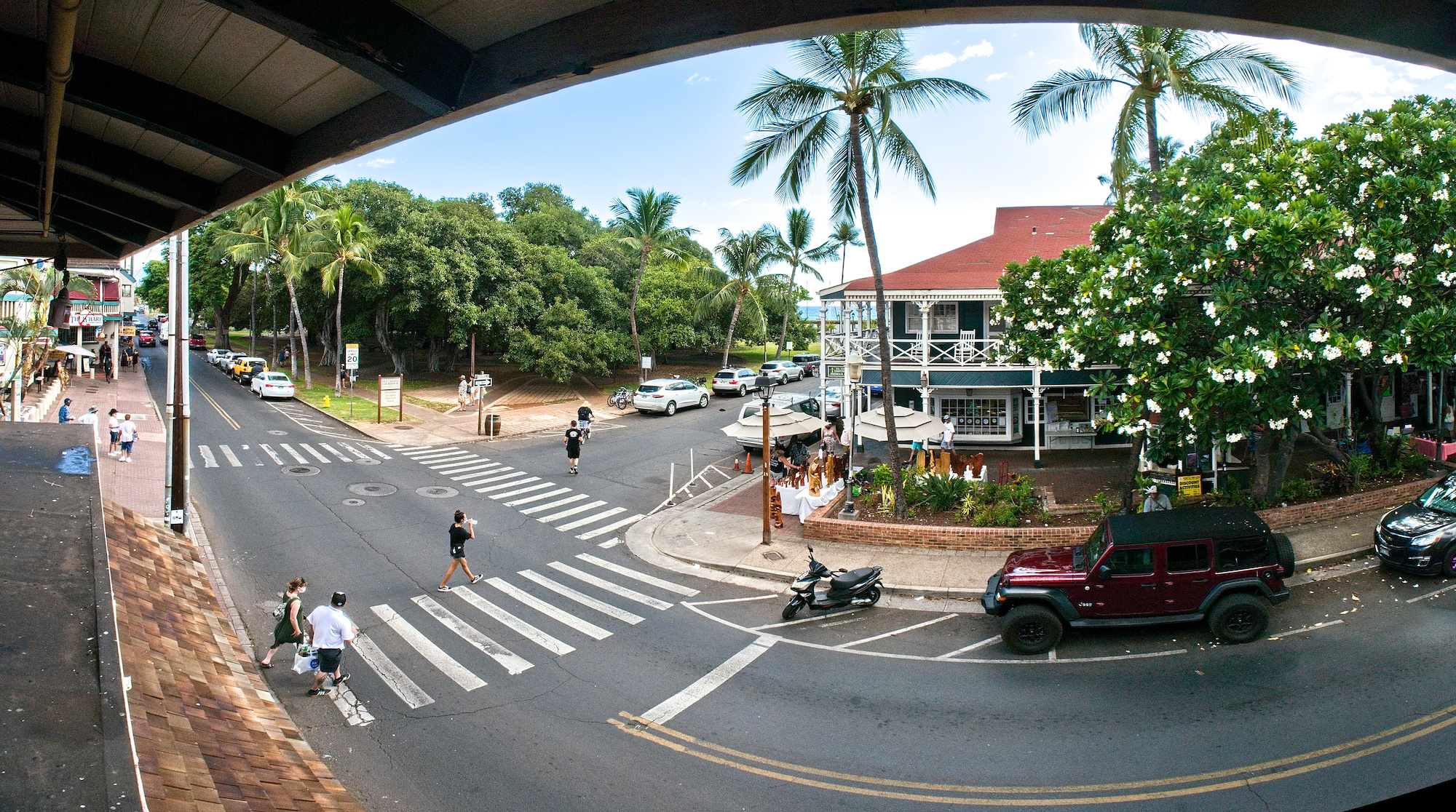
This is how the Lāhainā Banyan Court with its 150-year-old banyan tree and the old Court House looked back then:
Interactive Panorama of the Lāhainā Banyan Court
The 360° Little Planet view of the Lāhainā Banyan Court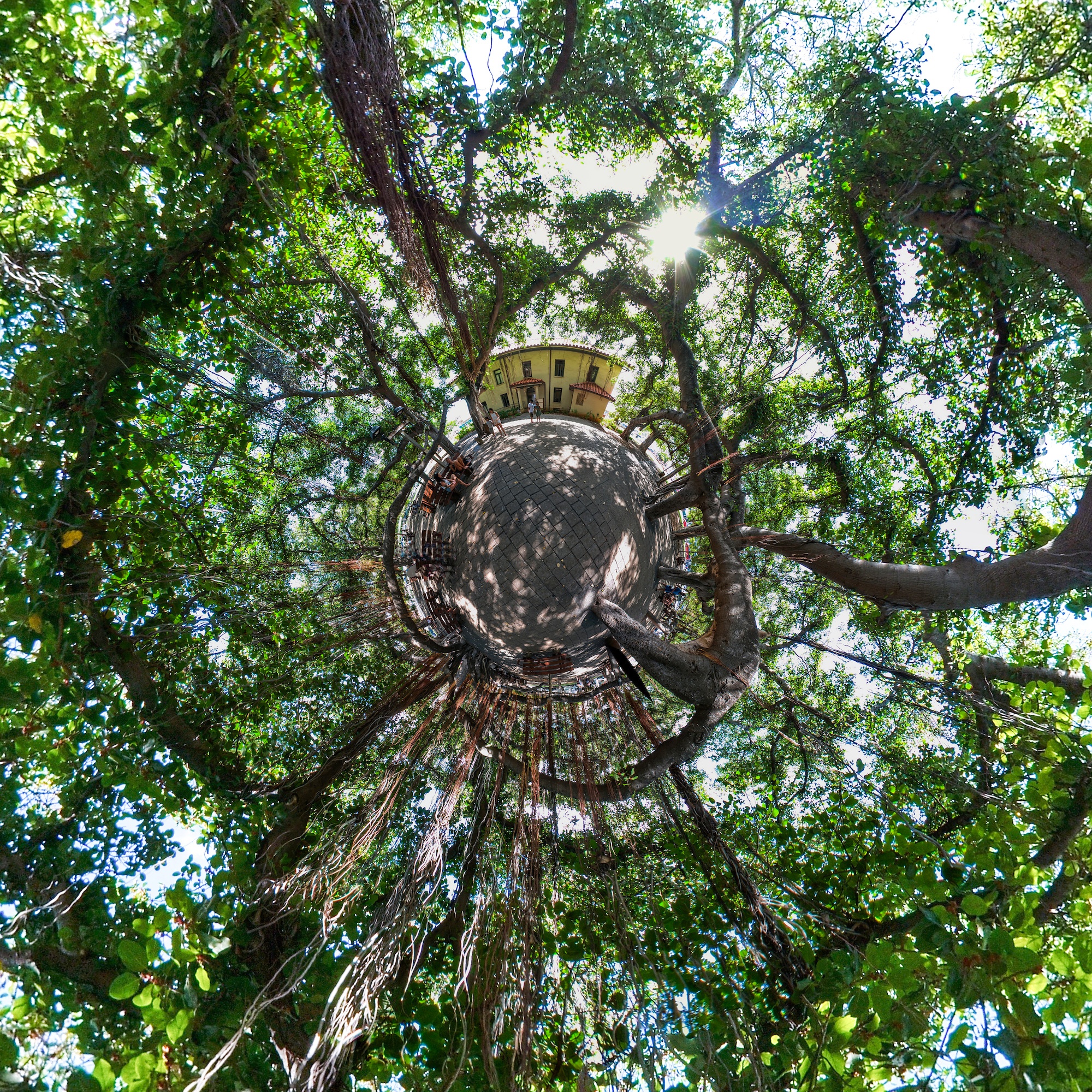
Northwest corner of the court with the legendary Captain Jack's.

-
Nikon Lens Queries
http://www.photosynthesis.co.nz/nikon/lenses.html is an extensive list of all Nikon Lenses, but as a simple web page also limited to data queries.
I created a PowerShell script to download and convert the html page to a JSON file to allow lens data queries.
See https://github.com/jurgen178/NikonLenses for the PowerShell script.
(Permission granted from photosynthesis.co.nz)
Example queries:# Filter the result for specific lens data. # Get all 6/2.8 lenses with AI. $ai = $allLensData.Where({ $_.Type.Contains("Ai") -and $_.Lens -eq "6/2.8" }) # Get all AI-S 6/2.8 lenses. $ais = $allLensData.Where({ $_.Type -eq "Ai-S" -and $_.Lens -eq "6/2.8" }) # Get all 16mm Fisheye lenses. $16mmFisheye = $allLensData.Where({ $_.Group -eq "Fisheye" -and $_.Lens.StartsWith("16/") }) # Get all AF lenses out of the 16mm Fisheye lenses. $AF16mmFisheye = $16mmFisheye.Where({ $_.Type -match "AF" }) # Get all 24-85 lenses. $24_85 = $allLensData.Where({ $_.Lens.StartsWith("24-85/") }) # Get all light lenses <200g. $lightLenses = $allLensData.Where({ $_.Weight.Length -gt 0 -and [int](($_.Weight -replace '^(\d+).*$', '$1')) -lt 200 }) # Get all heavy lenses >2000g. $heavyLenses = $allLensData.Where({ [int](($_.Weight -replace '^(\d+).*$', '$1')) -gt 2000 }) # Get the first 5 heaviest lenses. $first5heavyLenses = $heavyLenses.GetEnumerator() | Sort-Object { [int]($_.Weight) } -Descending | Select-Object -First 5 # 1200-1700/5.6-8 IF-ED Ai-P (16000g) # 1000/6.3 Reflex F (9900g) # 50cm/5 T·C S, M39 (8500g) # 360-1200/11 ED Ai-S (8250g) # 2000/11 Reflex A,C (7500g) foreach ($lens in $first5heavyLenses) { "$($lens.Lens) $($lens.Type) ($($lens.Weight)g)" } # Get all constant f/2.8 aperture lenses. $aperture_2_8 = $allLensData.Where({ $_.Lens -match "/2.8(\s|$)" }) # Get all Z mount VR lenses. $vr = $allLensData.Where({ $_.Type.Contains("Z") -and $_.Lens.Contains("VR") }) # Get all DX lenses out of the Z mount VR lenses. $vrdx = $vr.Where({ $_.Type -eq "Z DX" }) # Print result. # 12-28/3.5-5.6 PZ VR Z DX # 16-50/3.5-6.3 VR Z DX # 18-140/3.5-6.3 VR Z DX # 50-250/4.5-6.3 VR Z DX foreach ($lens in $vrdx) { "$($lens.Lens) $($lens.Type)" }
Or print all lens data.# Print all lens data by group. foreach ($lensGroup in $lenses.PsObject.Properties) { "$($lensGroup.Name) ($($lensGroup.Value.count))" $lensGroup.Name foreach ($lens in $lensGroup.Value) { $lens } } -
7Artisans Fisheye 7.5mm f/2.8 Nikon Z gets a makeover
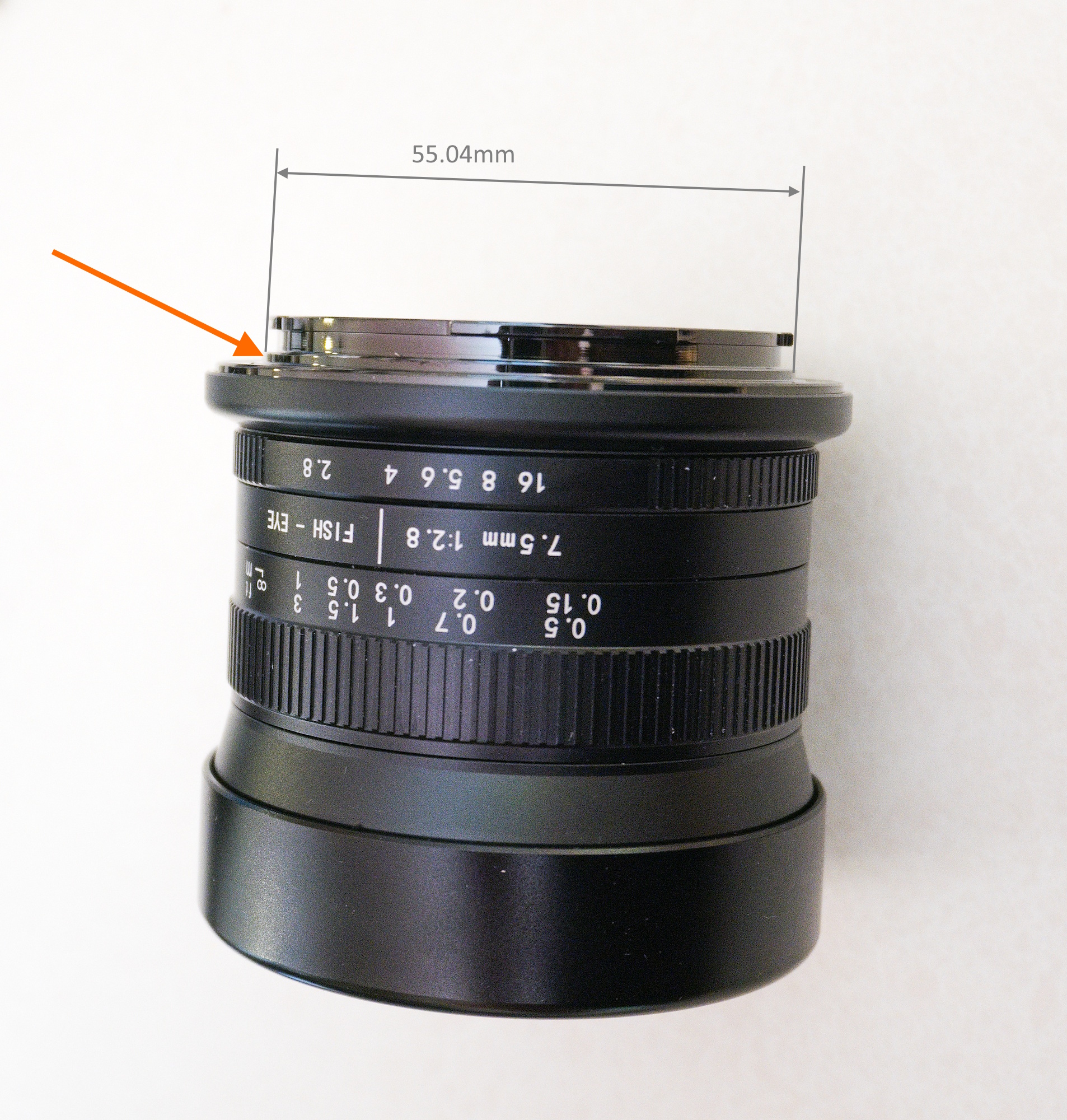
The support ring of the 7Artisans Fisheye for Nikon Z mount is 55.04mm, while the Nikon Z mount itself is 55mm.
Tight fit. You can barely screw that thing on.

The Nikkor 16-50mm is 54.91mm.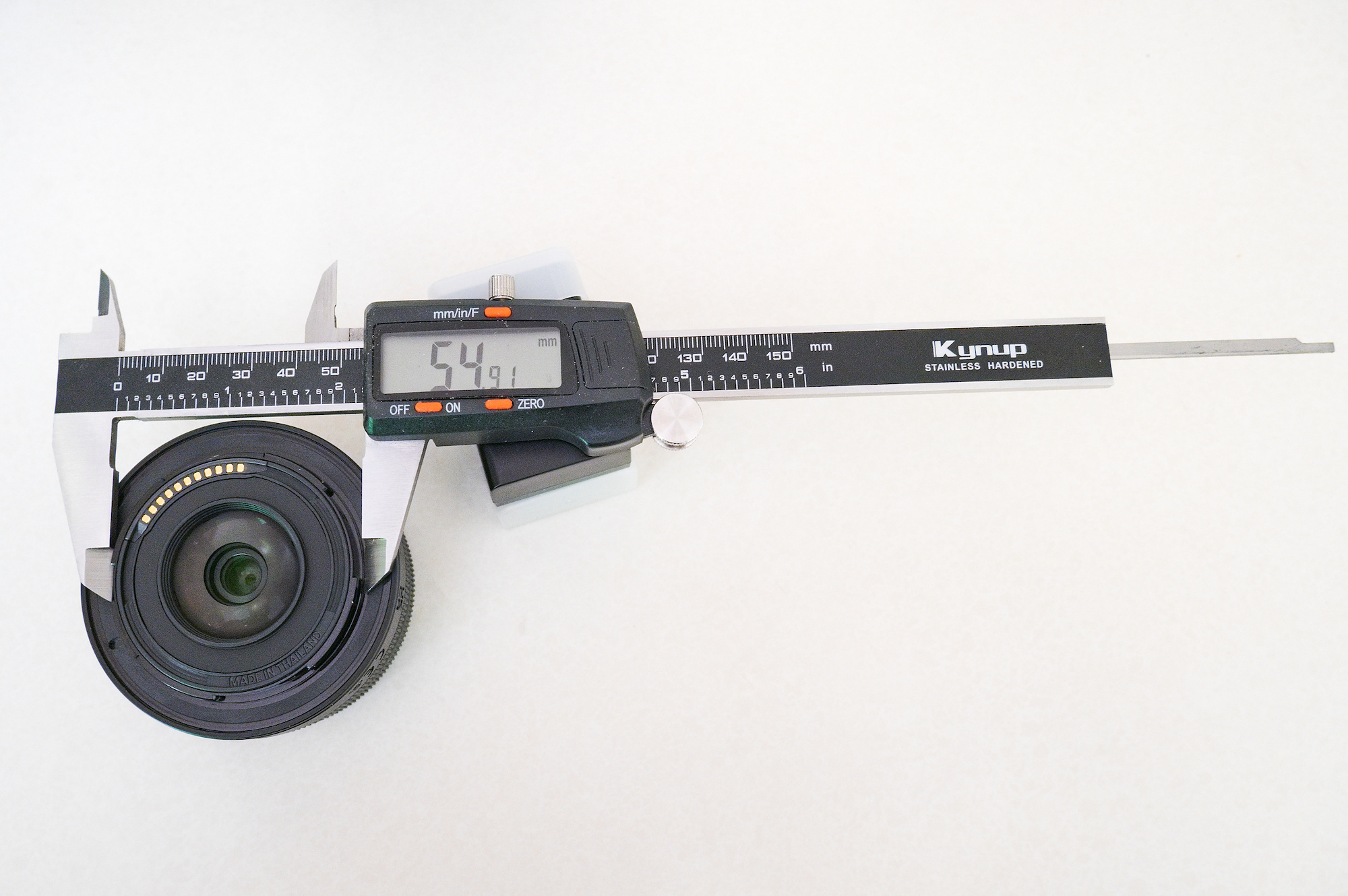
Even a cheap F to Z mount adapter is within tolerances.
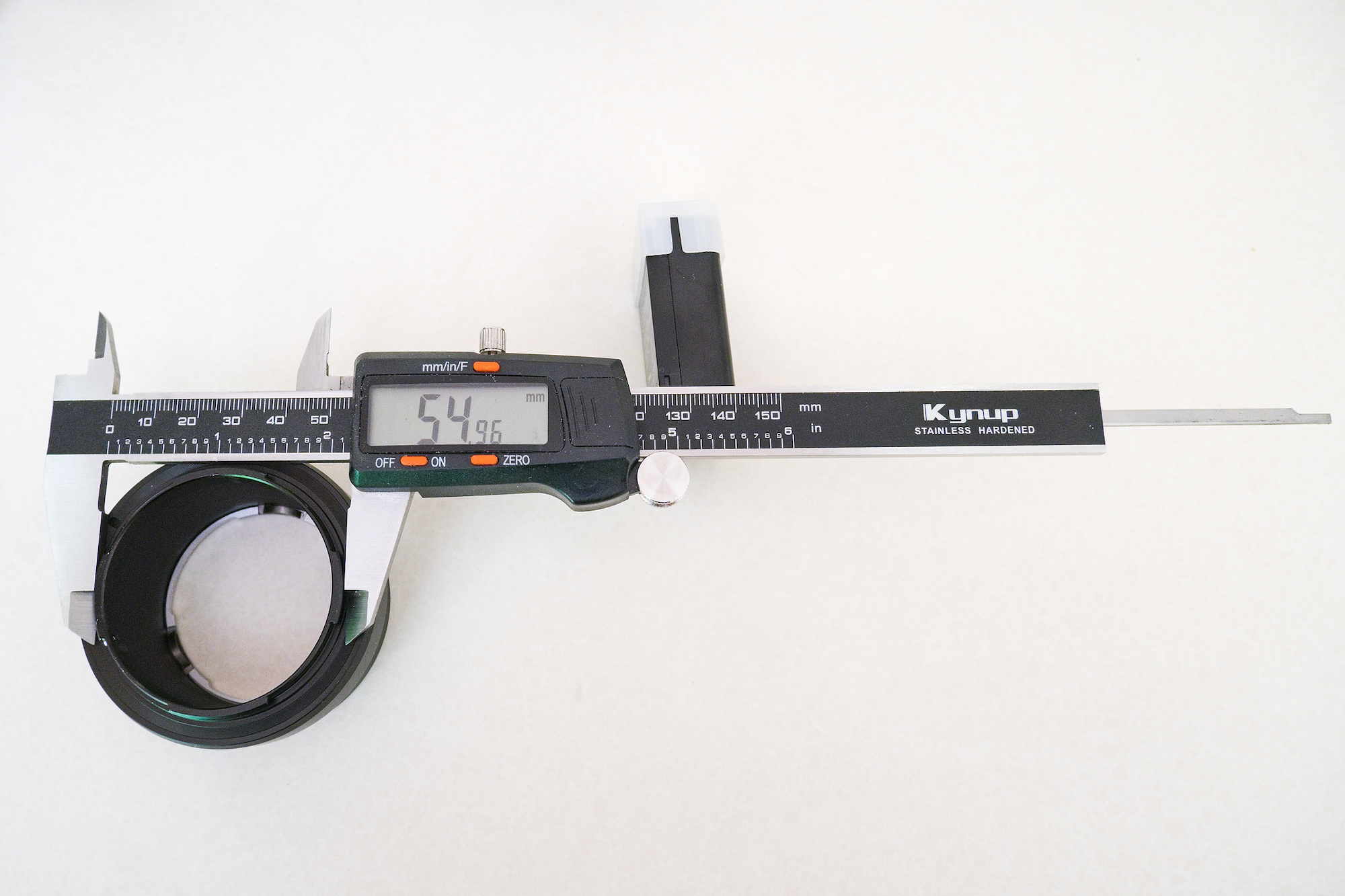
To fix this, first unscrew the lens mount.

The support ring needed to be reduced to 54.60mm. The mount is not perfectly round and a first trial to 54.80mm was still too tight.
Chinese tolerances of the overall mount, I guess.

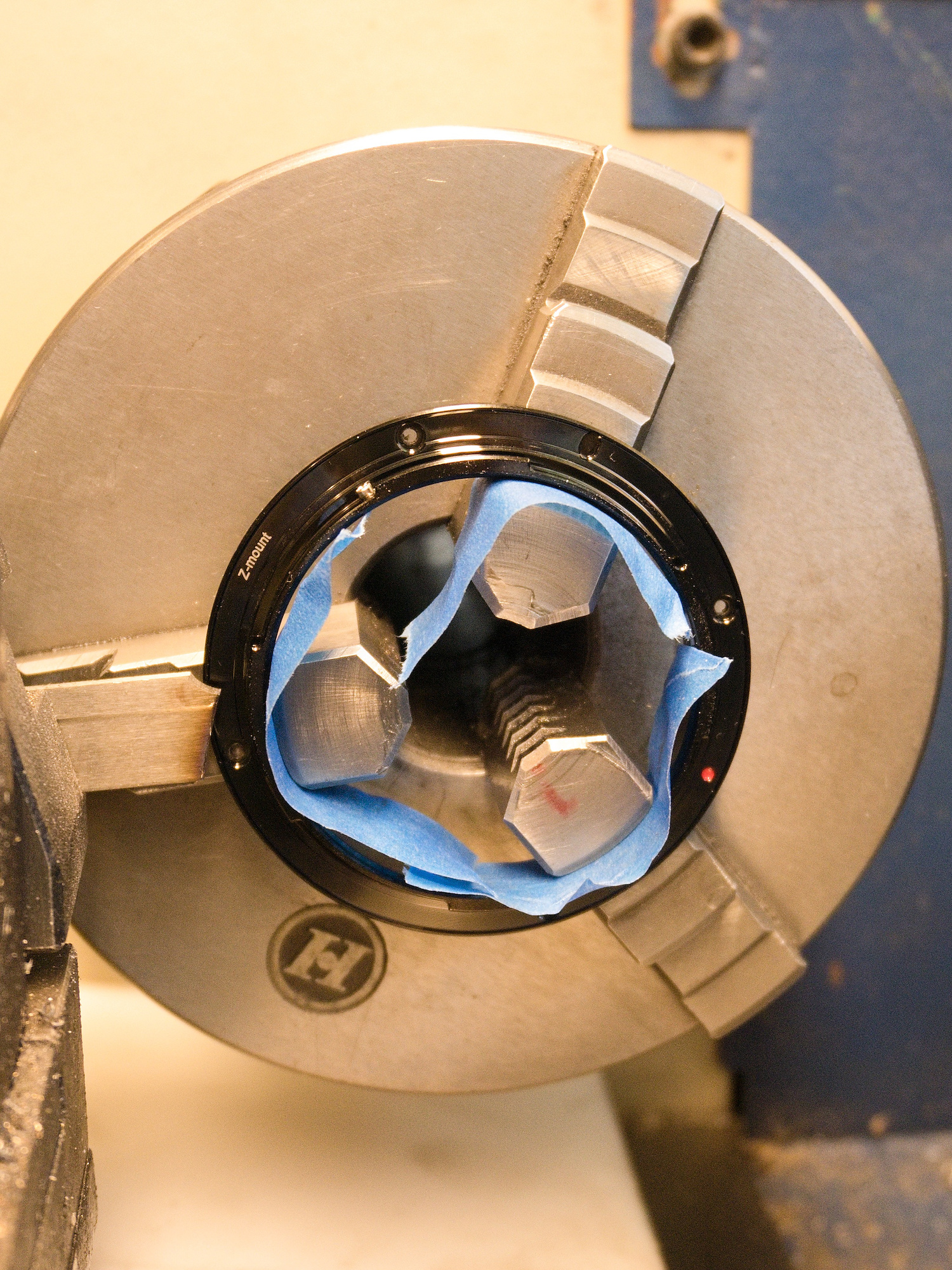
If you do not have access to a Lathe, you can use a fine file and make several rounds to take off the 0.2mm. Take your time and use tape to protect the ring.
Note: The mount is positioned with the red dot next to the Aperture print.
Done, Lens meets Camera.
Now it fits mirrorless.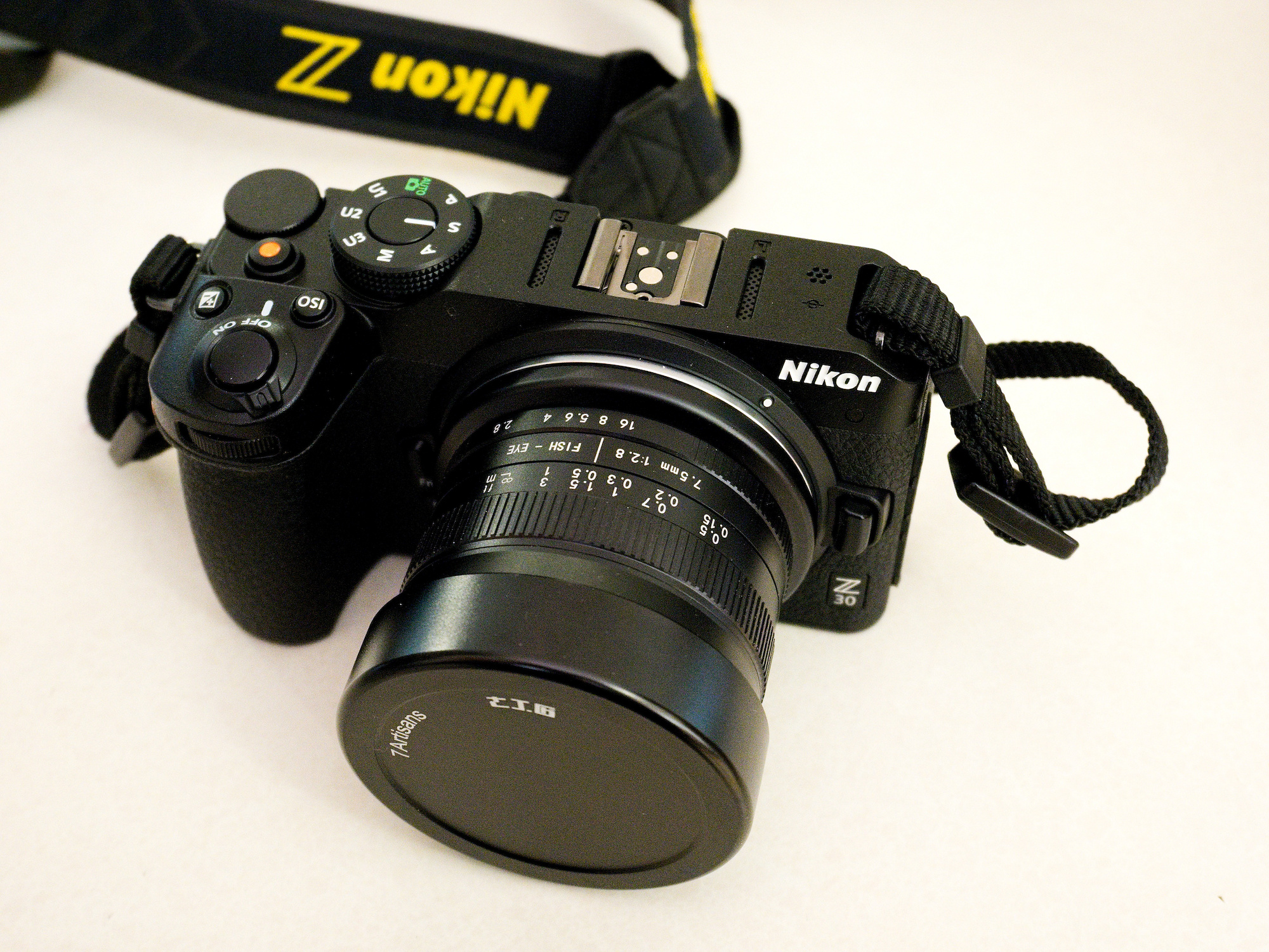
Update:
The lens is sharp only on one side.
Crop from the top part of the test picture. This is with f/5.6:
Camera rotated 180°:

Stopping down to f/8 improves things and of course its getting better with f/16.
Pay for a f/2.8 lens and use it like a pinhole camera.
Another creative feature is the remarkable colored lens flare when you point towards the sun with f/8-f/16. You get that for free when doing a 360°×180° panoramic image on a sunny day.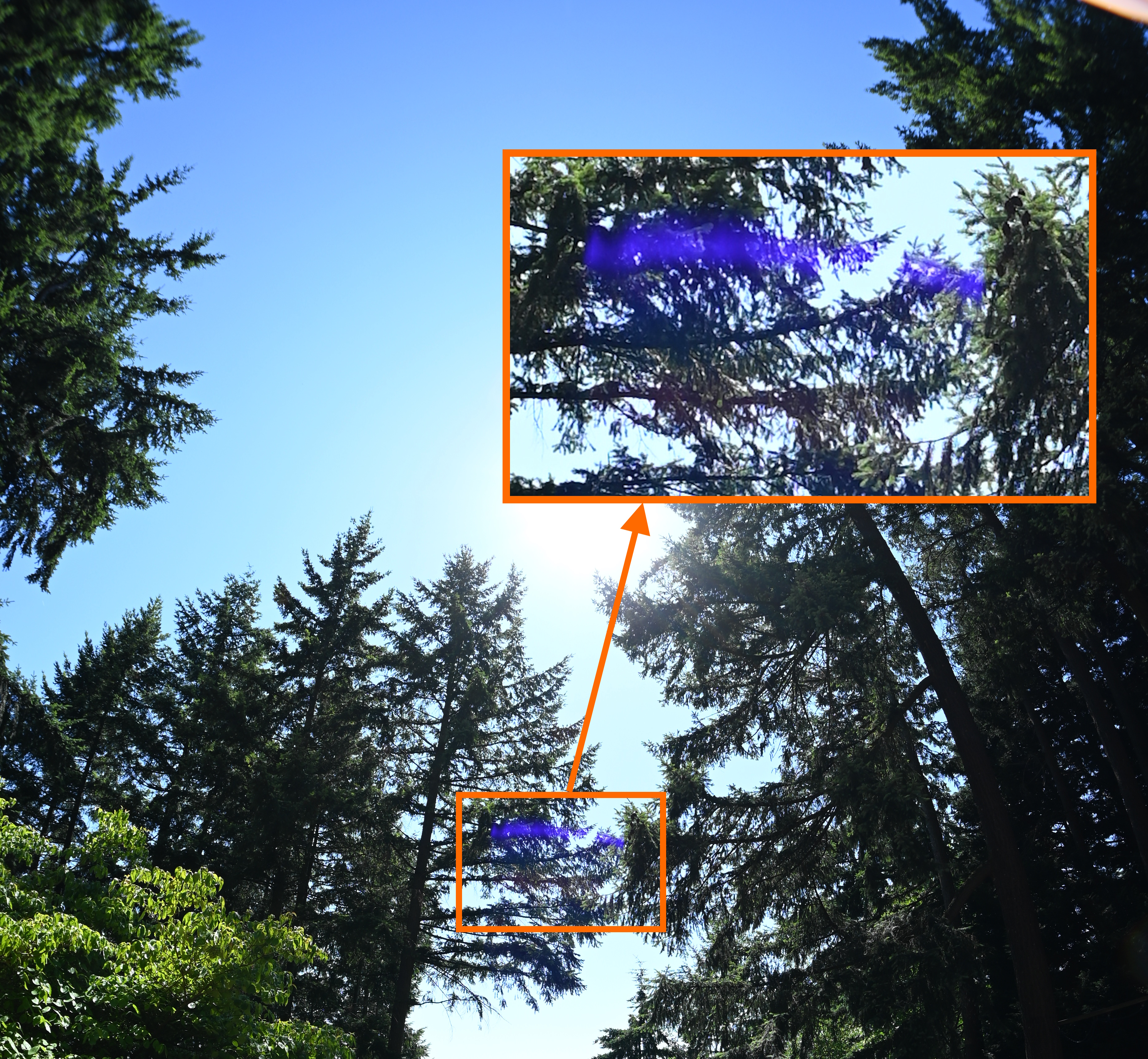
Update of the Update:
I contacted 7artisans through both their main site and store but received no response.
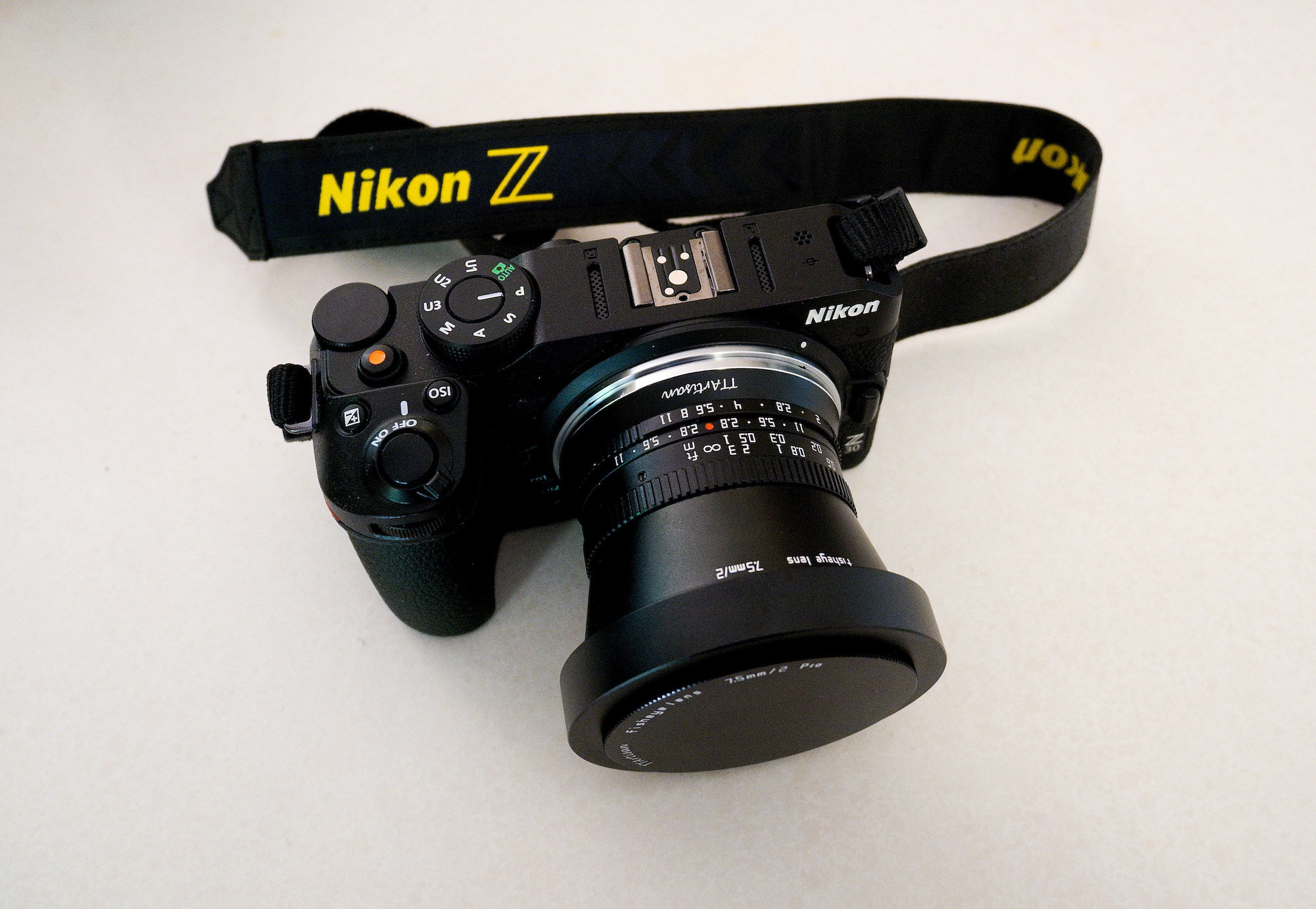
The issue was resolved by switching to a TTArtisan 7.5mm f/2.0, which matches the sharpness of my 7artisans copy even at f/2.0. The support ring measures a perfect 54.90 mm in diameter and mounts smoothly.
With that, my chapter with 7artisans ends here.
-
Squirrel Proof Bird Feeder 🐿
The Squirrel accepted the challenge.